ADHD and Anxiety in Kids: How to Tell the Difference and When It’s Both
By Sabrina Rojas Weiss
Medically reviewed by: Michael Tang, MD
Key Takeaways
Anxiety is one of the most common conditions to occur alongside ADHD, with some studies reporting overlap rates as high as 25 to 50 percent.
Both conditions share symptoms like restlessness, difficulty focusing, and irritability.
Effective treatment often addresses both ADHD and anxiety together rather than one at a time, and can involve a combination of therapy, medication, and family support.
Having lived with ADHD my whole life, I was on the lookout for signs of it in my son from the moment he entered preschool. To my surprise and dismay, the condition that showed up instead was anxiety, in the form of some scary panic attacks where he suddenly couldn’t breathe in the middle of class when he was 10. Six months (and many therapy sessions) later, the anxiety was under control. That’s when a teacher finally noticed that my son spent a lot of time staring out the window instead of listening during class. It turns out, he’s one of the many kids who have both ADHD and anxiety.
In fact, anxiety is one of the most common conditions to occur alongside ADHD. “Thirty to 50 percent of kids and teens with ADHD also have an anxiety disorder,” says M. Laura Pappa, Ph.D, who is the Mid-Atlantic Lead Director of Behavioral Health Services at Blackbird and a licensed clinical psychologist.
ADHD and anxiety often co-occur. Clinical Pediatrics cites rates as high as 25 to 50 percent of children with anxiety have ADHD, while a 2025 meta-analysis in Clinical Psychology Review estimates 18 percent of children and adolescents with ADHD have an anxiety disorder. Another reason for the wide range is that sometimes symptoms of anxiety can mask ADHD, and other times ADHD hides symptoms of anxiety, causing parents and experts to miss one condition or the other.
If you’ve been watching your child or teen struggle with school, have trouble making friends, or opt out of activities they’d actually enjoy, you may be wondering if they have ADHD vs. anxiety or both. Here’s an overview of both conditions and how to get your child the help they need.
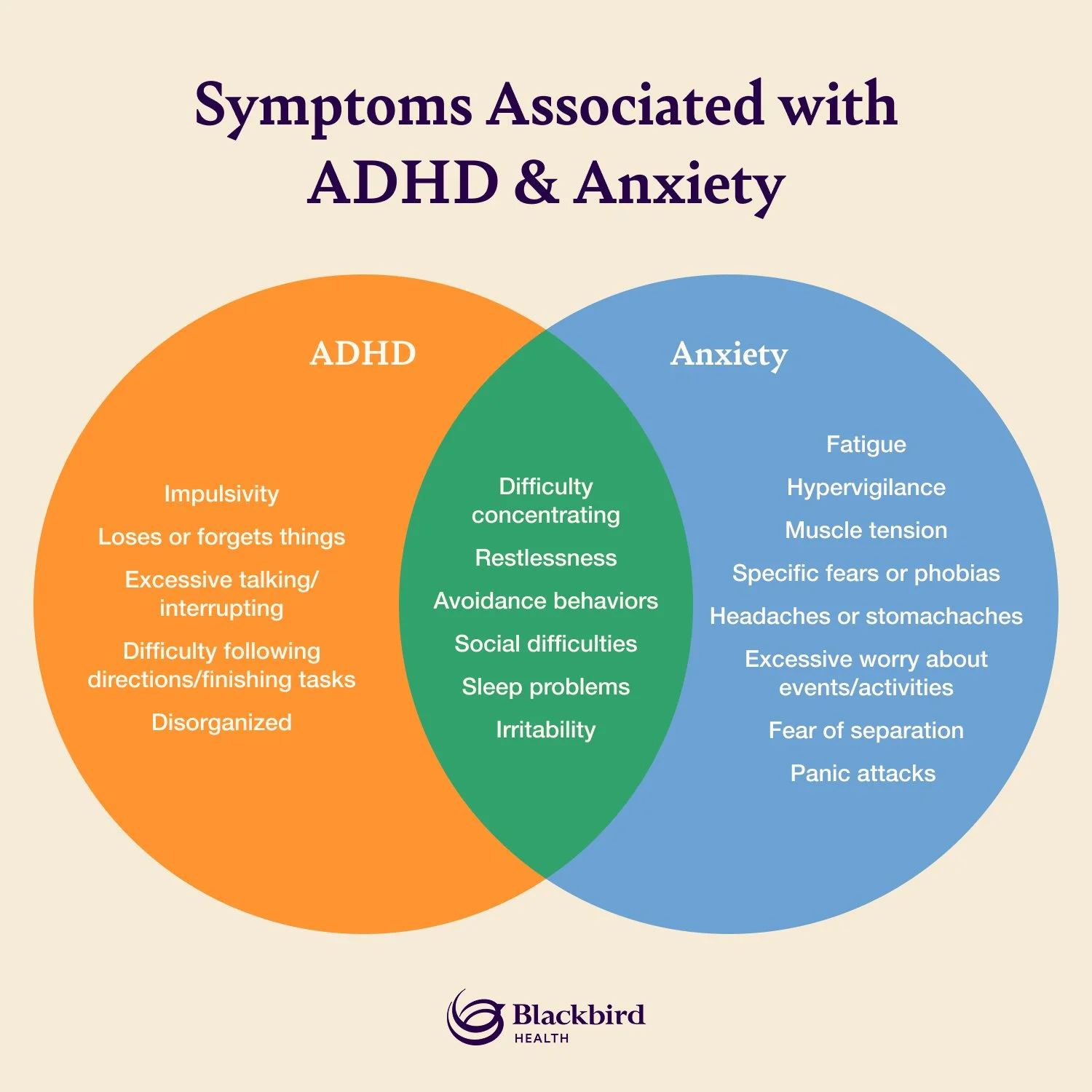
Is it ADHD, anxiety or both?
You may be wondering whether your child has ADHD or anxiety—or if they have both conditions. Many of the symptoms associated with ADHD and anxiety that are described in the The Diagnostic and Statistical Manual of Mental Disorders, Fifth Edition (DSM-5) overlap or look similar to each other on the surface.
Symptoms associated with ADHD and anxiety are sometimes shared in children and teens, but the reasons behind them can be different.
ADHD: Children and adults may have ADHD with hyperactivity-impulsivity, characterized by restlessness and talking; inattentive-type ADHD, the quieter version that looks more like an inability to focus, stay on task, or get organized; or they can have a combination of both.
Anxiety: Though some anxiety is normal, when fear and worries are out of proportion and cause difficulties, a person may have an anxiety disorder. Children and adolescents can be diagnosed with generalized anxiety disorder, panic disorder, social anxiety disorder, separation anxiety disorder, and/or specific phobias.
Behind the Symptoms: ADHD and Anxiety
| Symptom | ADHD | Anxiety | When Both Are Present |
|---|---|---|---|
| Difficulty concentrating | Inability to tune out distractions, but hyperfocused when the child finds something interesting. | Worry and rumination can crowd out other thoughts and activities. | Inattention could be misattributed to ADHD when it’s caused by worry; anxious students may work harder to compensate for inattentive moments. |
| Restlessness | Fidgeting and need for constant motion may be related to weaker executive functioning or a need to stimulate the brain through movement. | Fear can cause nervous energy and muscle tightness. | Hyperactive behavior may cause caregivers to miss physical symptoms of anxiety. |
| Avoidance behaviors | A child or teen will opt out of or fail to finish boring or difficult tasks. | A child will stay home or avoid activities due to fear or worry. | Avoidance due to fear of failure can be misattributed to ADHD-related procrastination, and vice versa. |
| Sleep problems | Neurological factors, resistance to bedtime, and medication side effects may impair sleep. | Worry and rumination keep them awake at night. | Lack of sleep due to anxiety can make ADHD symptoms (hyperactivity, lack of focus) appear worse. |
| Social challenges | Impulsivity, inattentiveness can make conversation difficult and alienate others. | Fewer friends, more loneliness, and a cycle of rejection and social anxiety. | Avoidance of social situations leads to inexperience with peer interactions; rejection due to impulsivity causes more anxiety about future interactions. |
| Irritability/moodiness | Difficulty regulating emotions, irritability after a day of masking their symptoms. | Anxiety’s “fight-or-flight” mode can come out as “fight,” causing the child to lash out. | Outbursts and mood swings that are difficult to control without intervention or tools. |
How ADHD and Anxiety Look Different in Younger Kids vs. Teens
As your child grows, the way ADHD and anxiety show up can change, too. Some symptoms remain consistent, while others become less obvious or take different forms. As a parent, it’s important to both understand what to look for and adjust your approach as your child matures.
“Parenting a teen is not the same as parenting an elementary-school child, and sometimes the parent needs support to change their styles and interventions,” says Jessica Estes, a psychiatric mental health nurse practitioner and the vice president of Medical Services at Blackbird Health.
ADHD in Younger Children
In younger children, hyperactive-impulsive ADHD can be relatively easy to spot. They may run around, fidget, resist requests to sit still, talk constantly, and become easily distracted, as a recent study in the Journal of Attention Disorders describes.
On the other hand, kids with inattentive-type ADHD may sit quietly in class and appear well behaved while actually daydreaming or struggling to follow lessons. As school becomes more demanding, issues with attention, organization, and remembering homework may become more noticeable.
ADHD in Teens
By adolescence, obvious hyperactivity often becomes subtler. Instead of running around the classroom or talking constantly, teens may fidget, feel restless, or frequently need to get up and move.
At the same time, problems with executive functioning and attention can have a bigger impact on school and daily life. Teens may struggle to finish or turn in assignments on time, lose track of belongings, or have difficulty staying organized. Impulsivity and emotional dysregulation can also affect friendships and other relationships, according to research in the Journal of Abnormal Psychology.
Anxiety in Younger Children
Young children often express anxiety through specific phobias, such as fear of spiders, the dark, thunderstorms, or dogs, according to the Journal of Child Psychology and Psychiatry. At times, these typical childhood fears impair functioning.
Separation anxiety is also common as children transition from home to daycare, preschool, and elementary school. Their fears may make them withdraw from activities or act out by refusing to participate or throwing tantrums, which can be mistaken for shyness or behavior problems rather than recognized as signs of anxiety.
Anxiety in Teens
As academics and friendships become more important, anxiety in teens often centers on school performance, relationships, and social situations. Teens may avoid things that make them anxious, including school, social gatherings, and challenging assignments.
They may also be more likely to internalize their worries. Instead of voicing what they’re feeling, they might complain of headaches or stomachaches. Anxiety can sometimes show up as irritability, anger, or aggression, according to Paediatrics Child Health.
Overall, older kids and teens are aware of what’s expected of them and may become better at masking their symptoms. And when ADHD and anxiety occur together, one condition can sometimes obscure the other. That makes it the job of parents, caregivers, and healthcare professionals to look beyond the obvious behaviors and ask the right questions.
How ADHD and Anxiety Are Connected, and Why Diagnosis Matters
On a neurobiological level, “both [ADHD and anxiety] involve overlapping brain circuits, the connection between the prefrontal cortex and the amygdala. Both are directly impacted by norepinephrine and dopamine levels,” says Pappa, and a review in Frontiers in Psychiatry demonstrates just how intertwined these functions are in the brain.
It’s important to diagnose both conditions and address them, rather than hoping a child will “just grow out of it.” They can interact in ways that make daily functioning harder.
Does ADHD cause anxiety? Not necessarily, Pappa says. “Symptoms of ADHD often fuel generalized anxiety disorder,” she explains. “Misplacing and losing a phone gets a child in trouble even though this is a classic problem for someone with ADHD. The fear of getting in trouble can contribute to anxiety or panic-like symptoms.”
Anxiety can mask ADHD. “An anxious child may use perfectionism to compensate for executive dysfunction,” Pappa says. “They might spend four hours on a 30-minute homework assignment out of fear of making a mistake or sit frozen and silent in class to avoid drawing attention. Clinicians might see a ‘model student,’ missing the intense internal struggle with inattention.”
Here’s what this doesn’t mean: Not all kids with ADHD have anxiety, and not all kids with anxiety have ADHD. Understanding anxiety vs. ADHD provides empathy for a child’s experience, recognizes this isn’t a passing phase, and paves the way for seeking help. Meeting with a healthcare provider that specializes in treating both conditions, such as Blackbird Health, for a comprehensive assessment will be a huge step toward figuring this all out.
If any of these situations feel familiar and they’ve been happening consistently, it may be worth talking with a professional.

How ADHD and Anxiety Are Connected, and Why Diagnosis Matters
On a neurobiological level, “both [ADHD and anxiety] involve overlapping brain circuits, the connection between the prefrontal cortex and the amygdala. Both are directly impacted by norepinephrine and dopamine levels,” says Pappa, and a review in Frontiers in Psychiatry demonstrates just how intertwined these functions are in the brain.
It’s important to diagnose both conditions and address them, rather than hoping a child will “just grow out of it.” They can interact in ways that make daily functioning harder.
Does ADHD cause anxiety? Not necessarily, Pappa says. “Symptoms of ADHD often fuel generalized anxiety disorder,” she explains. “Misplacing and losing a phone gets a child in trouble even though this is a classic problem for someone with ADHD. The fear of getting in trouble can contribute to anxiety or panic-like symptoms.”
Anxiety can mask ADHD. “An anxious child may use perfectionism to compensate for executive dysfunction,” Pappa says. “They might spend four hours on a 30-minute homework assignment out of fear of making a mistake or sit frozen and silent in class to avoid drawing attention. Clinicians might see a ‘model student,’ missing the intense internal struggle with inattention.”
Here’s what this doesn’t mean: Not all kids with ADHD have anxiety, and not all kids with anxiety have ADHD. Understanding anxiety vs. ADHD provides empathy for a child’s experience, recognizes this isn’t a passing phase, and paves the way for seeking help. Meeting with a healthcare provider that specializes in treating both conditions, such as Blackbird Health, for a comprehensive assessment will be a huge step toward figuring this all out.
If any of these situations feel familiar and they’ve been happening consistently, it may be worth talking with a professional.
What Helps: Treating ADHD and Anxiety Together
If your child is diagnosed with both anxiety and ADHD, treatment often addresses both conditions rather than waiting for one to improve first. That’s because symptoms of one condition can make it harder to treat the other.
“If a child's brain is constantly in a ‘fight-or-flight’ state due to anxiety, they won't have the emotional bandwidth to learn or apply new executive functioning tools,” explains Pappa. Likewise, “Cognitive Behavioral Therapy (CBT) for anxiety relies on exposure, tracking thoughts, and weekly homework. If ADHD symptoms make it impossible to stay focused during sessions or organize therapeutic assignments, therapy stalls.”
Treatment is usually individualized and may combine therapy, executive-function coaching, parent support, and medication.
Therapy and behavioral approaches for ADHD may include cognitive behavioral therapy (CBT), play therapy, or dialectical behavioral therapy (DBT), depending on the child’s age and needs. These approaches can help children manage their emotions, and develop problem-solving and social skills. Executive-function coaching can provide more practical support with organization, time management, and starting and finishing homework.
Parents can also receive training to help manage ADHD-related behaviors at home. Neuropsychological testing may help identify learning needs and support requests for school accommodations, including 504 plans and IEPs.
Behavioral approaches for anxiety often includes CBT, which is one of the most effective therapies for anxiety in children, according to the Journal for Nurse Practitioners. Depending on the child’s symptoms, therapy may also incorporate gradual exposure to phobias, emotional-regulation skills, mindfulness and social-skill building.
Parent support can be an important part of treatment, too. Parents can learn how to respond to anxiety without reinforcing avoidance or dismissing their child’s fears. Programs such as SPACE (Supportive Parenting for Anxious Childhood Emotions) specifically teach caregivers strategies for supporting kids with anxiety. Parents may also benefit from getting treatment for their own anxiety when needed—children of parents with an anxiety disorder are about 76 percent more likely to have one themselves, according to a review in The Journal of the American Academy of Child and Adolescent Psychiatry.
Medication for ADHD and Anxiety
Medication can also help children with ADHD, anxiety, or both. Understandably, many parents have questions and concerns when the topic comes up. If medications are prescribed, they may include:
Stimulants are first-line medications for ADHD and can also be effective for children who have both ADHD and anxiety, a study in Journal of Child and Adolescent Psychopharmacology showed. They tend to work quickly, although finding the right medication and dose may take some adjustment. “Stimulants are highly effective, but in some individuals, they can temporarily increase heart rate or muscle tension, which an anxious mind might interpret as a medical emergency causing panic,” Pappa says.
Nonstimulant ADHD medications such as atomoxetine (Strattera) are another option. Atomoxetine may also help reduce anxiety symptoms in children and adults, per The Journal for Nurse Practitioners.
Serotonin reuptake inhibitors (SSRIs) such as fluoxetine or sertraline is often a first-line medication treatment for anxiety.
Finding More Support
Getting help for a child or teen with one condition is challenging enough, let alone two. The right healthcare team will know how to coordinate treatment on all fronts. Here’s what to look for:
Evaluation and diagnosis: You may be able to get this through your child’s school, your pediatrician, or a separate mental healthcare provider, such as Blackbird Health.
Therapy for coping skills and emotion regulation: A psychologist or licensed social worker can help your child build the skills they need.
Executive Function Coaching: A coach can help your child and family with the concrete skills to better organize, manage tasks and regulate emotions.
Medication: A psychiatrist, psychiatric-mental health nurse practitioner, or a pediatrician can prescribe medications for ADHD and anxiety, but they will likely want your child to be receiving therapy at the same time.
Family support: You don’t need to navigate this on your own. Blackbird Health offers parent coaching and therapy, to help support you as you support your child.
A comprehensive evaluation can help determine if medications are appropriate for your child or teen. Blackbird Health offers new patient evaluations to develop an individualized treatment plan that may include therapy, medication, executive-function coaching or parent support.
The Bottom Line
ADHD and anxiety can overlap in children and teens, but similar symptoms don't always have the same cause. Understanding what drives a child's difficulty with focus, avoidance, restlessness, or irritability can help you recognize when ADHD, anxiety, or both may be affecting them. When both conditions are present, treatment can address both sets of symptoms through an individualized combination of therapy, coaching, medication when appropriate, and family support. If you're seeing persistent challenges that interfere with school, relationships, sleep, or daily life, a comprehensive evaluation can help clarify what's going on and what support may help.
Frequently Asked Questions (FAQs)
-
ADHD does not necessarily cause an anxiety disorder, but ADHD-related challenges can contribute to anxiety over time, Pappa explains.
-
If a child’s worry won’t go away, doesn’t seem proportionate to the actual threat, impairs their ability to perform at or even attend school or other important activities, or otherwise seems to harm them in any way, they should probably be screened for an anxiety disorder, the psychiatric journal Focus states.
-
There are a number of ways to help calm a child with both ADHD and anxiety. If they are experiencing a panic attack, in the immediate moment you can begin with mindfulness techniques such as breathing exercises or the grounding technique in which you ask the child to name five things they can see, four things they can feel, three things they can hear, two things they can smell, and one thing they can taste.
Big picture, if their anxiety is related to worries caused by their ADHD, you can work together to help develop their executive functioning skills, such as organizing their belongings and scheduling homework and study time.
You can speak to a mental health professional about forms of therapy, such as cognitive behavioral therapy (CBT), which teaches them to identify anxious thoughts and adjust how they react to them in their bodies.
How can Blackbird help?
Our goal is to initiate the right course of treatment as quickly and as smoothly as possible, so “how it works” can be a little different for everyone. We customize your treatment plan to meet your unique needs, on a timeline that works for you. Click here to get started today.